

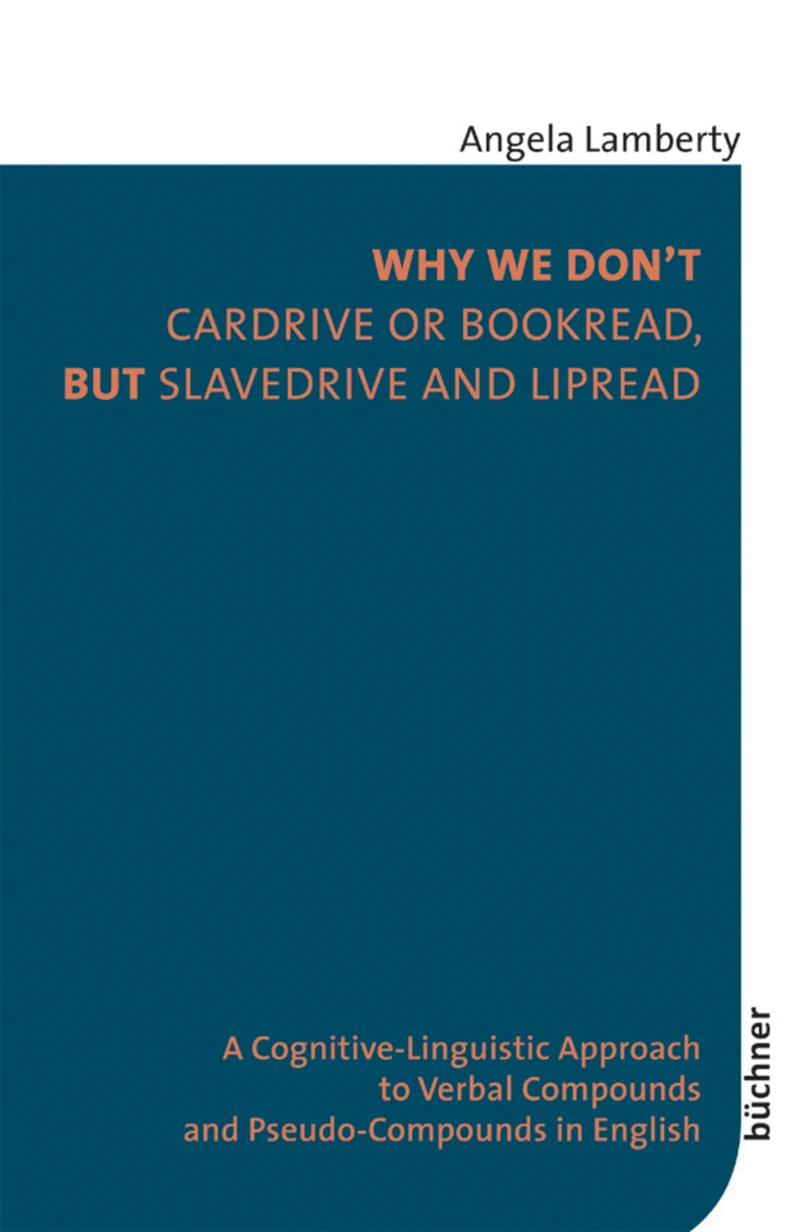
Compounding is a highly productive word-formation pattern in the English language. In light of this, it is counterintuitive that English lacks a general word-formation rule for genuine verbal compounds and those appear to be very rare. But for what reason does verbal composition disqualify as a productive word-formation pattern in English? How are verbal pseudo-compounds processed and what does this imply about the way in which newly coined genuine verbal compounds would be processed? What are the factors that determine and influence the processing of English verbal compounds and pseudo-compounds?
This book adopts a fresh cognitive linguistic perspective on verbal compounding and investigates the above questions with the help of experimental methods. It offers a novel and cognitive linguistically based model of mental access to verbal compounds and tries to complement the prevailing structural and typological approaches by insights on language processing.
Cómo acceder a tus libros electrónicos
¡Fácil, amigable y seguro!
Luego de la confirmación de compra realizada, tu libro electrónico se asignará a tu cuenta de usuario.
Olvídate de la descarga de licencias y la transferencia de archivos entre dispositivos. Ahora los contenidos son realmente tuyos, están protegidos y vinculados a tu cuenta.
Spiral Reader es un DRM (Digital Rights Management), una tecnología que permite la lectura de libros digitales protegiendo los contenidos.








Be the first to review “Why We Don’t Cardrive or Bookread, but Slavedrive and Lipread”